Comparison guide · source-checked guide
Zepbound vs Mounjaro: Label, Use, and Cost Guide (2026)
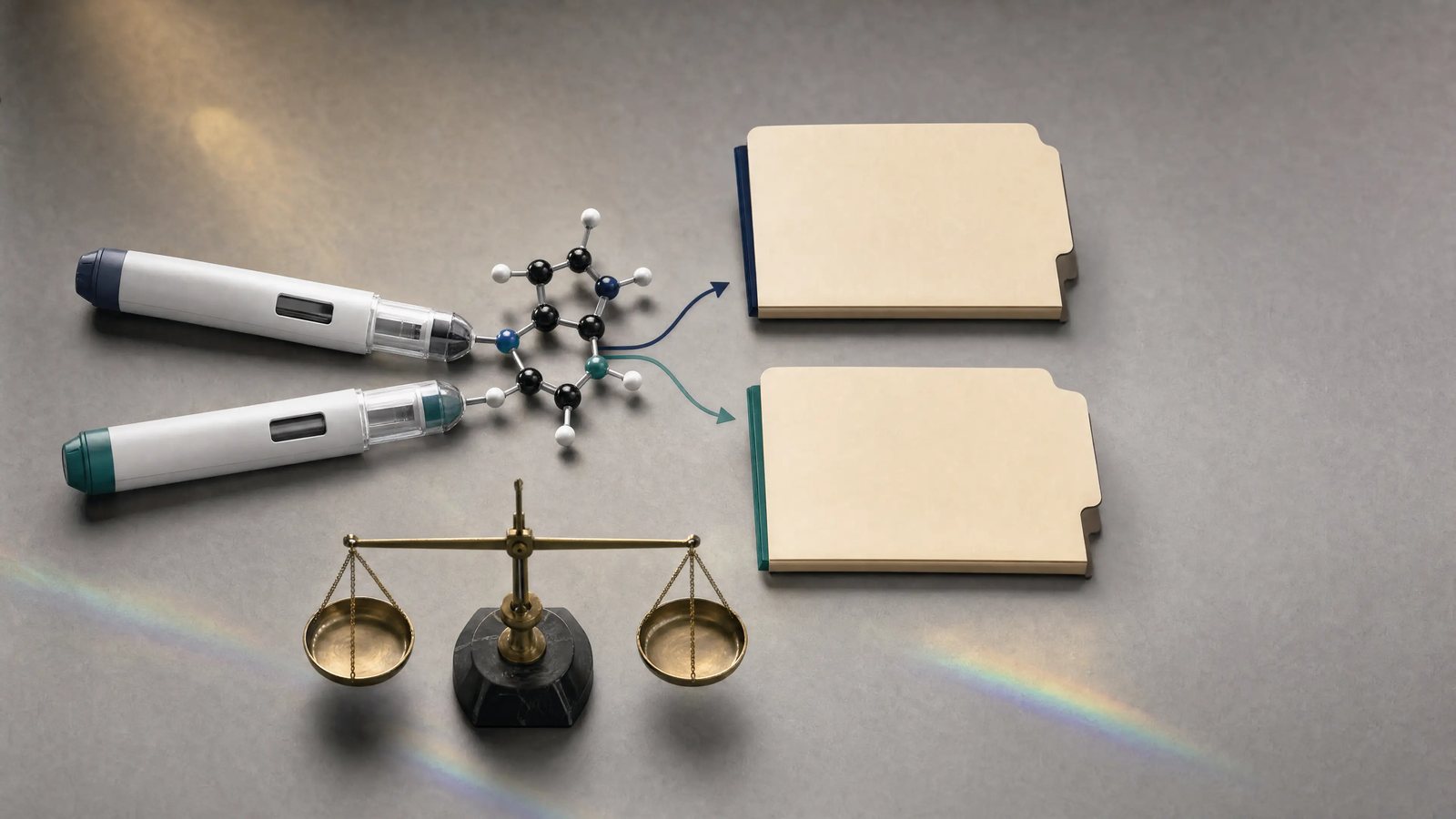
Sources current as of 2026-08-15 · Prices checked 2026-08-15 – 2026-08-15 · Prices and terms can change.
Mounjaro is FDA-labeled for type 2 diabetes; Zepbound for weight management and obesity with moderate-to-severe obstructive sleep apnea. LillyDirect lists Mounjaro from $499/month and specified Zepbound self-pay at $299–$449/month, subject to non-universal offer terms as of the cited review date. [S19][S2][S11][S12][S16]
The short version
The phrase “zepbound vs mounjaro” compresses three different questions: what the FDA label says, what a clinician may consider for an individual patient, and what a manufacturer’s current direct-to-patient price page displays. This guide separates those questions so a reader does not mistake the same active ingredient for interchangeable labeled use or mistake a self-pay starting figure for a complete treatment budget. [S19][S2][S5][S6][S10]
Both brand names refer to tirzepatide, but the labels are not identical. Mounjaro’s current FDA label says it is indicated as an adjunct to diet and exercise to improve glycemic control in adults and pediatric patients 10 years of age and older with type 2 diabetes mellitus. Zepbound’s label includes reducing excess body weight and maintaining weight reduction long term in adults with obesity, or adults with overweight with at least one weight-related comorbid condition. [S18] [S2] [S19][S10]
FDA-approved use is the first decision gate
Mounjaro’s label is the cleanest anchor for the diabetes side of the comparison: the indication is glycemic control in adults and pediatric patients 10 years of age and older with type 2 diabetes, used with diet and exercise. That wording should not be stretched into a general weight-loss claim, and it should not be treated as a statement about what an individual plan will cover. [S18]
Zepbound’s label is the anchor for the weight-management side. It describes reducing excess body weight and maintaining weight reduction over the long term in adults with obesity or some adults with overweight and a weight-related comorbid condition. The same label also includes treatment of moderate-to-severe obstructive sleep apnea in adults with obesity. [S2]
| Question | What the current label says |
|---|---|
| Mounjaro | Adjunct to diet and exercise to improve glycemic control in adults and pediatric patients 10 years of age and older with type 2 diabetes mellitus. [S18] |
| Zepbound | Reduce excess body weight and maintain weight reduction long term in eligible adults; it also carries an indication for moderate-to-severe OSA in adults with obesity. [S2] |
| Same active ingredient | Both products contain tirzepatide, but the label purpose and patient population are not interchangeable by default. [S19] [S2] [S10] |
Starting-dose language is label information, not a switch plan
The Mounjaro label states that the recommended starting dosage is 2.5 mg injected subcutaneously once weekly, and that the 2.5 mg dosage is for treatment initiation rather than glycemic control. It also says the dose may be increased after four weeks when additional glycemic control is needed, with a maximum dosage for adults of 15 mg once weekly. [S19]
The Zepbound label also states a 2.5 mg once-weekly starting dosage for four weeks, followed by increases in 2.5 mg increments after at least four weeks until the recommended maintenance dosage is achieved. That is a label summary, not a recommendation to start, stop, combine, or switch medicines. [S4]
The two labels’ starting-dose language can look similar while the prescribing context remains different. A reader switching from one tirzepatide product to another should not infer a personal schedule from a web article. LillyDirect’s own patient-facing page tells people changing from another medicine to discuss the right approach with a healthcare provider. [S4][S16]
Do not combine tirzepatide-containing products or add a GLP-1 receptor agonist based on this comparison. The relevant label, medication guide, current prescription, and clinician instructions control. This page intentionally avoids giving a patient-specific dose or switching protocol. [S2] [S4] [S19][S10]
Current self-pay price snapshot: what is actually stated
The following is a dated self-pay snapshot, not a promise of insurance coverage or a prediction of a patient's checkout total. The LillyDirect page labels the Zepbound figures as self-pay prices, requires eligibility, and says terms and conditions apply. [S12]
LillyDirect defines a month for the KwikPen offer as 28 days and one single-patient-use KwikPen, and for the vial offer as 28 days and four single-dose vials. Eligibility, terms, and monthly or annual limits apply. Lilly may terminate, rescind, revoke, or amend card eligibility and terms at any time without notice and for any reason. The programs are not insurance. [S12]
| Product/presentation stated by the source | Current LillyDirect self-pay language and limits |
|---|---|
| Mounjaro | Starting at **$499/month** for listed single-dose prefilled pen doses; for self-pay; prescription required; terms apply; additional taxes and fees may apply. This does not establish a final checkout total, insurance benefit, or supply guarantee. [S11] |
| Zepbound KwikPen 2.5 mg/0.6 mL (starting dose) | Starting at **$299/month**. This does not make the starting-dose price a clinical recommendation or a universal price. [S12] |
| Zepbound KwikPen 5 mg/0.6 mL | Starting at **$399/month**. This does not establish a coverage determination or a price outside the stated program terms. [S12] |
| Zepbound 7.5 mg, 10 mg, 12.5 mg, and 15 mg | LillyDirect lists **$449/month** under the stated Journey Program condition; regular prices apply if the prescription is not refilled within 45 days: **$499** for 7.5 mg and **$699** for 10 mg, 12.5 mg, and 15 mg. This does not establish that the program price applies without eligibility or includes every tax, fee, or other cost. [S12] |
What the headline price leaves out
A monthly medicine price can omit or condition several items: prescription eligibility, insurance status and prior authorization, taxes, fees, injection supplies, refill timing, program eligibility, and whether the displayed offer is self-pay. LillyDirect’s Mounjaro page says prescription required, terms apply, and additional taxes and fees may apply; it also checks insurance and supports prior authorization. The Zepbound page ties self-pay offers to eligibility, presentation, supplies, and refill terms. [S11][S12]
The Zepbound page says self-pay eligibility is required, terms and conditions apply, savings have monthly and annual limits, and the program is not insurance. It says KwikPen injections require a new pen needle and vial injections require a new needle and syringe. The page’s price must be read with those conditions rather than copied into a generic “monthly cost” field. [S12]
For higher Zepbound strengths, the refill condition is not a footnote to ignore. LillyDirect says the displayed $449 amount reflects the Journey Program when the prescription is refilled within 45 days, and it lists regular prices that apply if the condition is not met. That makes the refill cadence part of the price evidence. [S6]
A useful budget worksheet should keep four columns separate: labeled product and presentation, price lane, eligibility or cadence condition, and excluded extras. This prevents a self-pay offer, an insurance copay, and a pharmacy checkout total from being merged into one number that neither source actually promised. [S5] [S6] [S7] [S8]
How to compare the two products without overclaiming
For a broader insurance-versus-self-pay decision, compare the found vs Trimi insurance and self-pay guide rather than assuming a manufacturer self-pay price is the right comparator. For a product-level cost worksheet, the Mounjaro cost evidence guide is the more focused next read. See the GLP-1 total-cost comparison for a broader worksheet.
- Start with the clinical question. Is the discussion about glycemic control in adults and pediatric patients 10 years of age and older with type 2 diabetes, weight management, obesity with OSA, or another situation that needs clinician review? The FDA labels answer the approved-use part; they do not answer a person-specific treatment decision. [S18] [S2]
- Verify the exact product and presentation. Mounjaro is shown in listed single-dose prefilled pen doses; Zepbound is shown as KwikPen, vial, and single-dose pen presentations with different supply and delivery or pickup details. [S11][S12]
- Separate payment lanes. Label each figure as self-pay, insurance, or pharmacy checkout. The captured LillyDirect Mounjaro figure is self-pay; the captured Zepbound page distinguishes self-pay KwikPen and vial offers from insurance-price single-dose pens. [S11][S12]
- Record the date. Manufacturer offers can change. This page checked the cited FDA labels and LillyDirect pages on 2026-08-15; recheck the live page before making a purchase decision. [S19][S10][S11][S12]
- Ask what is not included. Confirm taxes, fees, supplies, shipping or pickup, insurance processing, prior authorization, refill timing, eligibility, and whether a program is insurance. [S11][S12]
Keep the evidence lanes separate
When recording a comparison, write the source class beside every figure: FDA label, manufacturer self-pay, insurer, pharmacy, or checkout. If the source does not state a fee, delivery charge, tax, or eligibility rule, write “not stated” rather than filling the gap with an estimate. This is especially important when two prices look close but one is conditioned on a refill program or a specific presentation. [S5] [S6] [S7] [S8]
| Evidence lane | What it can answer |
|---|---|
| FDA prescribing information | Approved use and label dosage language for the named product. [S19] [S2] [S4] |
| Manufacturer self-pay page | The current displayed offer, presentation, and conditions on the captured page. [S5] [S6] [S7] [S8] |
How tirzepatide works in both products
Both labels describe tirzepatide as a GIP receptor and GLP-1 receptor agonist that binds and activates both receptors. The Mounjaro label adds that tirzepatide enhances first- and second-phase insulin secretion and reduces glucagon in a glucose-dependent manner; the Zepbound label notes that GLP-1 regulates appetite and caloric intake. This is mechanism information, not an individualized outcome prediction. [S19][S10]
Safety topics from the current label captures
Same active ingredient; different labeled use.
The current FDA label captures identify Mounjaro and Zepbound as tirzepatide injections. Mounjaro’s label describes its diabetes use; Zepbound’s FDA indication and LillyDirect patient information describe obesity/weight-management use. That distinction is about the approved indication, not a claim that one product is a universal substitute for the other. [S19][S2][S10][S16]
Common adverse reactions, like for like.
Both labels list nausea, diarrhea, vomiting, constipation, dyspepsia, and abdominal pain among common adverse reactions reported in at least 5% of treated patients. Mounjaro’s list also includes decreased appetite; Zepbound’s includes injection-site reactions, fatigue, hypersensitivity reactions, eructation, hair loss, and gastroesophageal reflux disease. [S19][S10]
The Mounjaro boxed warning states that tirzepatide causes thyroid C-cell tumors in rats and that its relevance to humans has not been determined. This is label-level safety information, not a patient-specific risk assessment. [S19]
Contraindication and coadministration boundaries.
Both labels list contraindications for a personal or family history of medullary thyroid carcinoma or MEN 2 and for known serious hypersensitivity to tirzepatide or product excipients. The Zepbound label says coadministration with other tirzepatide-containing products or any GLP-1 receptor agonist is not recommended; LillyDirect likewise says Zepbound should not be used with those products. This article does not turn those statements into individualized prescribing advice. [S19][S10][S16][S17]
Evidence limits.
The sources support labeled use, label safety language, and the dated offer terms above. They do not establish a patient's eligibility, insurance coverage, prior-authorization outcome, final checkout amount, or which product a clinician should prescribe. [S5][S6][S19][S10][S12]
Update policy
**Last checked:** 2026-08-15. This page should be refreshed when the FDA label or official prescribing information changes; when LillyDirect changes a presentation, self-pay price, eligibility rule, refill window, monthly/annual limit, tax or fee language, or availability; or when any cited official URL becomes unavailable or canonicalizes to a different page. If a source omits a requested detail, the article records that field as **not stated** rather than filling it from a secondary source.
Safety and prescribing boundaries
The safest interpretation of this article is narrow: it explains why the two product pages should not be collapsed into one “same drug, same use, same price” conclusion. It does not rank efficacy, estimate outcomes, recommend a dose, or tell a reader how to switch. [S19] [S2] [S4]
If a reader has a new or worsening symptom, a suspected adverse reaction, pregnancy-related question, or urgent medication concern, contact the appropriate licensed clinician or emergency service. A static comparison page cannot assess urgency or provide individualized medical guidance.
Tirzepatide and semaglutide brand label scope
The FDA-label relationship starts with two active-ingredient pairs, not four interchangeable brand names. The current Mounjaro and Zepbound label captures identify tirzepatide, while the current Ozempic and Wegovy label captures identify semaglutide. The tirzepatide labels describe activity at both GIP and GLP-1 receptors; the semaglutide labels describe a GLP-1 receptor agonist that binds and activates the GLP-1 receptor. Those statements define an ingredient and mechanism boundary. They do not rank clinical effect, predict an outcome, or establish which product fits an individual. [S19][S10][S20][S21]
Mounjaro and Zepbound share tirzepatide, but their cited FDA indications remain separate. Mounjaro is labeled as an adjunct to diet and exercise to improve glycemic control in adults and pediatric patients 10 years of age and older with type 2 diabetes mellitus. Zepbound’s captured label covers reducing excess body weight and maintaining weight reduction long term in specified adults, plus treating moderate-to-severe obstructive sleep apnea in adults with obesity. The shared ingredient does not merge those indication statements into one combined label. [S19][S2][S10]
Ozempic and Wegovy similarly share semaglutide while carrying different label scopes. The current Ozempic injection label lists three indication lanes: improving glycemic control in adults with type 2 diabetes, reducing major adverse cardiovascular-event risk in adults with type 2 diabetes and established cardiovascular disease, and reducing specified kidney and cardiovascular risks in adults with type 2 diabetes and chronic kidney disease. This paragraph reports the label scope only; it is not a comparison of outcomes against tirzepatide or against another semaglutide brand. [S20]
The current Wegovy label uses a different set of indication statements. For Wegovy injection, the captured label includes major cardiovascular-event risk reduction in adults with established cardiovascular disease and either obesity or overweight; long-term reduction of excess body weight in specified adults and pediatric patients aged 12 years and older; and treatment of noncirrhotic metabolic dysfunction-associated steatohepatitis with moderate to advanced liver fibrosis in adults. The MASH indication is described in the label as accelerated approval, with continued approval potentially contingent on verification and description of clinical benefit in a confirmatory trial. [S21]
The table is a scope map, not a substitution chart. A brand does not acquire another brand’s indication merely because the active ingredient matches. Mounjaro’s indication remains the indication printed in the Mounjaro label, and Zepbound’s indications remain the indications printed in the Zepbound label. The same rule keeps Ozempic’s current indication list separate from Wegovy’s current indication list. Reading by brand, ingredient, dosage form, population, and indication prevents a statement about one label from being silently transferred to another. [S19][S2][S10][S20][S21]
The mechanism language also needs to stay in its own evidence lane. The current Mounjaro and Zepbound captures describe tirzepatide as acting at GIP and GLP-1 receptors. The current Ozempic and Wegovy captures describe semaglutide as a GLP-1 analogue and GLP-1 receptor agonist. That difference can explain why the four brand names should not be collapsed into a single generic “GLP-1” entry. It still does not answer which product is more effective, whether results from one labeled population transfer to another, or whether a person should receive any prescription product. [S19][S10][S20][S21]
For a source-bounded comparison, record the exact brand first, then the ingredient, dosage form, labeled use, named population, label revision, and source URL. In this packet, Mounjaro is bound to the NDA 215866/S-041 label revised January 2026, Ozempic injection to the NDA 209637/S-038 label revised May 2026, and Wegovy to the NDA 215256/S-033 label revised February 2026. Zepbound remains bound to its cited FDA label capture. Those dates identify the evidence snapshots used here; they are not promises that a label will remain unchanged. [S19][S10][S20][S21]
Readers comparing the diabetes-label relationship can continue to the Mounjaro vs Ozempic label and cost guide. Readers comparing the weight-management label relationship can use the Ozempic vs Zepbound guide. Those links provide context for the named pair; they do not convert this four-brand scope map into an efficacy ranking, a dose-conversion tool, or an individual treatment recommendation. The current labels and a licensed prescriber remain the controlling sources for product-specific prescribing questions. [S19][S10][S20][S21]
The narrow conclusion is therefore about label organization: Mounjaro and Zepbound are the tirzepatide pair in this comparison, while Ozempic and Wegovy are the semaglutide pair, and each brand keeps its own FDA-labeled uses and populations. This section makes no comparative-efficacy claim and no individual-suitability claim. It also does not infer insurance coverage, price, or availability from an FDA indication. Those are separate evidence lanes that require their own dated sources. [S19][S2][S10][S20][S21]
| Brand and active ingredient | Current FDA label scope |
|---|---|
| Mounjaro — Tirzepatide | Glycemic control in adults and pediatric patients 10 years of age and older with type 2 diabetes, with diet and exercise. [S19] |
| Zepbound — Tirzepatide | Long-term weight reduction in specified adults and moderate-to-severe OSA treatment in adults with obesity. [S2][S10] |
| Ozempic — Semaglutide | Adult type 2 diabetes glycemic control and the specified cardiovascular and kidney-risk indications in the current injection label. [S20] |
| Wegovy — Semaglutide | The specified weight-reduction, cardiovascular-risk, and MASH indications in the current label capture. [S21] |
Frequently asked questions
Are Zepbound and Mounjaro the same medication?
They both contain tirzepatide, but the FDA-approved uses differ. Mounjaro’s cited label is for improving glycemic control in adults and pediatric patients 10 years of age and older with type 2 diabetes, while Zepbound’s cited label includes weight management and moderate-to-severe OSA in adults with obesity. [S18] [S2] [S19][S10]
Which is cheaper without insurance?
The current LillyDirect pages do not support one universal answer. The captured Mounjaro self-pay page starts at $499/month, while the Zepbound page lists self-pay prices from $299 to $449/month for specified presentations and conditions. Prescription, eligibility, taxes, fees, refill timing, and supplies can change the final amount. [S11][S12][S16]
Does the $449 Zepbound price apply every month?
Not automatically. LillyDirect states that for 7.5 mg, 10 mg, 12.5 mg, and 15 mg, the $449 figure reflects the Journey Program when refilled within 45 days; regular prices apply if the refill condition is not met. [S6]
Can I switch from Mounjaro to Zepbound using this article’s dose information?
No. The label starting-dose language is included to show what each label says, not to create a personal switch plan. A person changing medicines should discuss the approach with the prescribing healthcare professional. [S19][S4][S16]
Does a LillyDirect self-pay price equal an insurance copay?
No. The cited figures are manufacturer-page self-pay offer terms. The Mounjaro page says prescription required, terms apply, and additional taxes and fees may apply; the Zepbound page says eligibility and terms apply and that the program is not insurance. [S11][S12]
Are generic versions of Mounjaro or Zepbound available?
No FDA-approved generic version appears in the current FDA Drugs@FDA API result for tirzepatide. The result contains two records, both Lilly NDAs for the Mounjaro and Zepbound brand families; “tirzepatide” is the generic ingredient name, not evidence of a separately approved generic product. [S15]
Which is more effective, Mounjaro or Zepbound?
The current primary evidence in this packet does not support declaring a Mounjaro-versus-Zepbound effectiveness winner. Both contain tirzepatide, but their FDA labels address different labeled uses and populations, so this label evidence is not a head-to-head brand comparison. [S19][S2][S10]
What to verify
Confirm
- Uses current primary evidence.
- Separates verified facts from unknowns.
- Maps decision-bearing claims to captured source text.
Do not assume
- Terms, prices, labels, and coverage can change.
- Individual outcomes and eligibility cannot be inferred from general evidence.
- The page cannot replace clinician, plan, or pharmacy verification.
Verified claims
Each statement below is bound to its numbered source.
Open the claim-to-source map (58 claims)
- > **Quick answer:** Mounjaro is FDA-labeled for type 2 diabetes; Zepbound for weight management and obesity with moderate-to-severe obstructive sleep apnea. LillyDirect lists Mounjaro from $499/month and specified Zepbound self-pay at $299–$449/month, subject to non-universal offer terms as of the cited review date. [S19][S2][S11][S12][S16]192111216
- Both are prescription medicines; this guide does not determine whether either product is suitable for an individual. [S19][S10]1910
- The phrase “zepbound vs mounjaro” compresses three different questions: what the FDA label says, what a clinician may consider for an individual patient, and what a manufacturer’s current direct-to-patient price page displays. This guide separates those questions so a reader does not mistake the same active ingredient for interchangeable labeled use or mistake a self-pay starting figure for a complete treatment budget. [S19][S2][S5][S6][S10]1925610
- Both brand names refer to tirzepatide, but the labels are not identical. Mounjaro’s current FDA label says it is indicated as an adjunct to diet and exercise to improve glycemic control in adults and pediatric patients 10 years of age and older with type 2 diabetes mellitus. Zepbound’s label includes reducing excess body weight and maintaining weight reduction long term in adults with obesity, or adults with overweight with at least one weight-related comorbid condition. [S18] [S2] [S19][S10]1821910
- | Mounjaro | Adjunct to diet and exercise to improve glycemic control in adults and pediatric patients 10 years of age and older with type 2 diabetes mellitus. [S18] |18
- | Zepbound | Reduce excess body weight and maintain weight reduction long term in eligible adults; it also carries an indication for moderate-to-severe OSA in adults with obesity. [S2] |2
- | Same active ingredient | Both products contain tirzepatide, but the label purpose and patient population are not interchangeable by default. [S19] [S2] [S10] |19210
- Mounjaro’s label is the cleanest anchor for the diabetes side of the comparison: the indication is glycemic control in adults and pediatric patients 10 years of age and older with type 2 diabetes, used with diet and exercise. That wording should not be stretched into a general weight-loss claim, and it should not be treated as a statement about what an individual plan will cover. [S18]18
- Zepbound’s label is the anchor for the weight-management side. It describes reducing excess body weight and maintaining weight reduction over the long term in adults with obesity or some adults with overweight and a weight-related comorbid condition. The same label also includes treatment of moderate-to-severe obstructive sleep apnea in adults with obesity. [S2]2
- The Mounjaro label states that the recommended starting dosage is 2.5 mg injected subcutaneously once weekly, and that the 2.5 mg dosage is for treatment initiation rather than glycemic control. It also says the dose may be increased after four weeks when additional glycemic control is needed, with a maximum dosage for adults of 15 mg once weekly. [S19]19
- The Zepbound label also states a 2.5 mg once-weekly starting dosage for four weeks, followed by increases in 2.5 mg increments after at least four weeks until the recommended maintenance dosage is achieved. That is a label summary, not a recommendation to start, stop, combine, or switch medicines. [S4]4
- The two labels’ starting-dose language can look similar while the prescribing context remains different. A reader switching from one tirzepatide product to another should not infer a personal schedule from a web article. LillyDirect’s own patient-facing page tells people changing from another medicine to discuss the right approach with a healthcare provider. [S4][S16]416
- Do not combine tirzepatide-containing products or add a GLP-1 receptor agonist based on this comparison. The relevant label, medication guide, current prescription, and clinician instructions control. This page intentionally avoids giving a patient-specific dose or switching protocol. [S2] [S4] [S19][S10]241910
- The following is a dated self-pay snapshot, not a promise of insurance coverage or a prediction of a patient's checkout total. The LillyDirect page labels the Zepbound figures as self-pay prices, requires eligibility, and says terms and conditions apply. [S12]12
- | Mounjaro | Starting at **$499/month** for listed single-dose prefilled pen doses; for self-pay; prescription required; terms apply; additional taxes and fees may apply. This does not establish a final checkout total, insurance benefit, or supply guarantee. [S11] |11
- | Zepbound KwikPen 2.5 mg/0.6 mL (starting dose) | Starting at **$299/month**. This does not make the starting-dose price a clinical recommendation or a universal price. [S12] |12
- | Zepbound KwikPen 5 mg/0.6 mL | Starting at **$399/month**. This does not establish a coverage determination or a price outside the stated program terms. [S12] |12
- | Zepbound 7.5 mg, 10 mg, 12.5 mg, and 15 mg | LillyDirect lists **$449/month** under the stated Journey Program condition; regular prices apply if the prescription is not refilled within 45 days: **$499** for 7.5 mg and **$699** for 10 mg, 12.5 mg, and 15 mg. This does not establish that the program price applies without eligibility or includes every tax, fee, or other cost. [S12] |12
- LillyDirect defines a month for the KwikPen offer as 28 days and one single-patient-use KwikPen, and for the vial offer as 28 days and four single-dose vials. Eligibility, terms, and monthly or annual limits apply. Lilly may terminate, rescind, revoke, or amend card eligibility and terms at any time without notice and for any reason. The programs are not insurance. [S12]12
- A monthly medicine price can omit or condition several items: prescription eligibility, insurance status and prior authorization, taxes, fees, injection supplies, refill timing, program eligibility, and whether the displayed offer is self-pay. LillyDirect’s Mounjaro page says prescription required, terms apply, and additional taxes and fees may apply; it also checks insurance and supports prior authorization. The Zepbound page ties self-pay offers to eligibility, presentation, supplies, and refill terms. [S11][S12]1112
- The Zepbound page says self-pay eligibility is required, terms and conditions apply, savings have monthly and annual limits, and the program is not insurance. It says KwikPen injections require a new pen needle and vial injections require a new needle and syringe. The page’s price must be read with those conditions rather than copied into a generic “monthly cost” field. [S12]12
- For higher Zepbound strengths, the refill condition is not a footnote to ignore. LillyDirect says the displayed $449 amount reflects the Journey Program when the prescription is refilled within 45 days, and it lists regular prices that apply if the condition is not met. That makes the refill cadence part of the price evidence. [S6]6
- A useful budget worksheet should keep four columns separate: labeled product and presentation, price lane, eligibility or cadence condition, and excluded extras. This prevents a self-pay offer, an insurance copay, and a pharmacy checkout total from being merged into one number that neither source actually promised. [S5] [S6] [S7] [S8]5678
- 1. Start with the clinical question. Is the discussion about glycemic control in adults and pediatric patients 10 years of age and older with type 2 diabetes, weight management, obesity with OSA, or another situation that needs clinician review? The FDA labels answer the approved-use part; they do not answer a person-specific treatment decision. [S18] [S2]182
- 2. Verify the exact product and presentation. Mounjaro is shown in listed single-dose prefilled pen doses; Zepbound is shown as KwikPen, vial, and single-dose pen presentations with different supply and delivery or pickup details. [S11][S12]1112
- 3. Separate payment lanes. Label each figure as self-pay, insurance, or pharmacy checkout. The captured LillyDirect Mounjaro figure is self-pay; the captured Zepbound page distinguishes self-pay KwikPen and vial offers from insurance-price single-dose pens. [S11][S12]1112
- 4. Record the date. Manufacturer offers can change. This page checked the cited FDA labels and LillyDirect pages on 2026-08-15; recheck the live page before making a purchase decision. [S19][S10][S11][S12]19101112
- 5. Ask what is not included. Confirm taxes, fees, supplies, shipping or pickup, insurance processing, prior authorization, refill timing, eligibility, and whether a program is insurance. [S11][S12]1112
- | FDA prescribing information | Approved use and label dosage language for the named product. [S19] [S2] [S4] |1924
- | Manufacturer self-pay page | The current displayed offer, presentation, and conditions on the captured page. [S5] [S6] [S7] [S8] |5678
- When recording a comparison, write the source class beside every figure: FDA label, manufacturer self-pay, insurer, pharmacy, or checkout. If the source does not state a fee, delivery charge, tax, or eligibility rule, write “not stated” rather than filling the gap with an estimate. This is especially important when two prices look close but one is conditioned on a refill program or a specific presentation. [S5] [S6] [S7] [S8]5678
- Both labels describe tirzepatide as a GIP receptor and GLP-1 receptor agonist that binds and activates both receptors. The Mounjaro label adds that tirzepatide enhances first- and second-phase insulin secretion and reduces glucagon in a glucose-dependent manner; the Zepbound label notes that GLP-1 regulates appetite and caloric intake. This is mechanism information, not an individualized outcome prediction. [S19][S10]1910
- The current FDA label captures identify Mounjaro and Zepbound as tirzepatide injections. Mounjaro’s label describes its diabetes use; Zepbound’s FDA indication and LillyDirect patient information describe obesity/weight-management use. That distinction is about the approved indication, not a claim that one product is a universal substitute for the other. [S19][S2][S10][S16]1921016
- Both labels list nausea, diarrhea, vomiting, constipation, dyspepsia, and abdominal pain among common adverse reactions reported in at least 5% of treated patients. Mounjaro’s list also includes decreased appetite; Zepbound’s includes injection-site reactions, fatigue, hypersensitivity reactions, eructation, hair loss, and gastroesophageal reflux disease. [S19][S10]1910
- The Mounjaro boxed warning states that tirzepatide causes thyroid C-cell tumors in rats and that its relevance to humans has not been determined. This is label-level safety information, not a patient-specific risk assessment. [S19]19
- Both labels list contraindications for a personal or family history of medullary thyroid carcinoma or MEN 2 and for known serious hypersensitivity to tirzepatide or product excipients. The Zepbound label says coadministration with other tirzepatide-containing products or any GLP-1 receptor agonist is not recommended; LillyDirect likewise says Zepbound should not be used with those products. This article does not turn those statements into individualized prescribing advice. [S19][S10][S16][S17]19101617
- The sources support labeled use, label safety language, and the dated offer terms above. They do not establish a patient's eligibility, insurance coverage, prior-authorization outcome, final checkout amount, or which product a clinician should prescribe. [S5][S6][S19][S10][S12]56191012
- The safest interpretation of this article is narrow: it explains why the two product pages should not be collapsed into one “same drug, same use, same price” conclusion. It does not rank efficacy, estimate outcomes, recommend a dose, or tell a reader how to switch. [S19] [S2] [S4]1924
- They both contain tirzepatide, but the FDA-approved uses differ. Mounjaro’s cited label is for improving glycemic control in adults and pediatric patients 10 years of age and older with type 2 diabetes, while Zepbound’s cited label includes weight management and moderate-to-severe OSA in adults with obesity. [S18] [S2] [S19][S10]1821910
- The current LillyDirect pages do not support one universal answer. The captured Mounjaro self-pay page starts at $499/month, while the Zepbound page lists self-pay prices from $299 to $449/month for specified presentations and conditions. Prescription, eligibility, taxes, fees, refill timing, and supplies can change the final amount. [S11][S12][S16]111216
- Not automatically. LillyDirect states that for 7.5 mg, 10 mg, 12.5 mg, and 15 mg, the $449 figure reflects the Journey Program when refilled within 45 days; regular prices apply if the refill condition is not met. [S6]6
- No. The label starting-dose language is included to show what each label says, not to create a personal switch plan. A person changing medicines should discuss the approach with the prescribing healthcare professional. [S19][S4][S16]19416
- No. The cited figures are manufacturer-page self-pay offer terms. The Mounjaro page says prescription required, terms apply, and additional taxes and fees may apply; the Zepbound page says eligibility and terms apply and that the program is not insurance. [S11][S12]1112
- No FDA-approved generic version appears in the current FDA Drugs@FDA API result for tirzepatide. The result contains two records, both Lilly NDAs for the Mounjaro and Zepbound brand families; “tirzepatide” is the generic ingredient name, not evidence of a separately approved generic product. [S15]15
- The current primary evidence in this packet does not support declaring a Mounjaro-versus-Zepbound effectiveness winner. Both contain tirzepatide, but their FDA labels address different labeled uses and populations, so this label evidence is not a head-to-head brand comparison. [S19][S2][S10]19210
- The FDA-label relationship starts with two active-ingredient pairs, not four interchangeable brand names. The current Mounjaro and Zepbound label captures identify tirzepatide, while the current Ozempic and Wegovy label captures identify semaglutide. The tirzepatide labels describe activity at both GIP and GLP-1 receptors; the semaglutide labels describe a GLP-1 receptor agonist that binds and activates the GLP-1 receptor. Those statements define an ingredient and mechanism boundary. They do not rank clinical effect, predict an outcome, or establish which product fits an individual. [S19][S10][S20][S21]19102021
- Mounjaro and Zepbound share tirzepatide, but their cited FDA indications remain separate. Mounjaro is labeled as an adjunct to diet and exercise to improve glycemic control in adults and pediatric patients 10 years of age and older with type 2 diabetes mellitus. Zepbound’s captured label covers reducing excess body weight and maintaining weight reduction long term in specified adults, plus treating moderate-to-severe obstructive sleep apnea in adults with obesity. The shared ingredient does not merge those indication statements into one combined label. [S19][S2][S10]19210
- Ozempic and Wegovy similarly share semaglutide while carrying different label scopes. The current Ozempic injection label lists three indication lanes: improving glycemic control in adults with type 2 diabetes, reducing major adverse cardiovascular-event risk in adults with type 2 diabetes and established cardiovascular disease, and reducing specified kidney and cardiovascular risks in adults with type 2 diabetes and chronic kidney disease. This paragraph reports the label scope only; it is not a comparison of outcomes against tirzepatide or against another semaglutide brand. [S20]20
- The current Wegovy label uses a different set of indication statements. For Wegovy injection, the captured label includes major cardiovascular-event risk reduction in adults with established cardiovascular disease and either obesity or overweight; long-term reduction of excess body weight in specified adults and pediatric patients aged 12 years and older; and treatment of noncirrhotic metabolic dysfunction-associated steatohepatitis with moderate to advanced liver fibrosis in adults. The MASH indication is described in the label as accelerated approval, with continued approval potentially contingent on verification and description of clinical benefit in a confirmatory trial. [S21]21
- | Mounjaro — Tirzepatide | Glycemic control in adults and pediatric patients 10 years of age and older with type 2 diabetes, with diet and exercise. [S19] |19
- | Zepbound — Tirzepatide | Long-term weight reduction in specified adults and moderate-to-severe OSA treatment in adults with obesity. [S2][S10] |210
- | Ozempic — Semaglutide | Adult type 2 diabetes glycemic control and the specified cardiovascular and kidney-risk indications in the current injection label. [S20] |20
- | Wegovy — Semaglutide | The specified weight-reduction, cardiovascular-risk, and MASH indications in the current label capture. [S21] |21
- The table is a scope map, not a substitution chart. A brand does not acquire another brand’s indication merely because the active ingredient matches. Mounjaro’s indication remains the indication printed in the Mounjaro label, and Zepbound’s indications remain the indications printed in the Zepbound label. The same rule keeps Ozempic’s current indication list separate from Wegovy’s current indication list. Reading by brand, ingredient, dosage form, population, and indication prevents a statement about one label from being silently transferred to another. [S19][S2][S10][S20][S21]192102021
- The mechanism language also needs to stay in its own evidence lane. The current Mounjaro and Zepbound captures describe tirzepatide as acting at GIP and GLP-1 receptors. The current Ozempic and Wegovy captures describe semaglutide as a GLP-1 analogue and GLP-1 receptor agonist. That difference can explain why the four brand names should not be collapsed into a single generic “GLP-1” entry. It still does not answer which product is more effective, whether results from one labeled population transfer to another, or whether a person should receive any prescription product. [S19][S10][S20][S21]19102021
- For a source-bounded comparison, record the exact brand first, then the ingredient, dosage form, labeled use, named population, label revision, and source URL. In this packet, Mounjaro is bound to the NDA 215866/S-041 label revised January 2026, Ozempic injection to the NDA 209637/S-038 label revised May 2026, and Wegovy to the NDA 215256/S-033 label revised February 2026. Zepbound remains bound to its cited FDA label capture. Those dates identify the evidence snapshots used here; they are not promises that a label will remain unchanged. [S19][S10][S20][S21]19102021
- Readers comparing the diabetes-label relationship can continue to the [Mounjaro vs Ozempic label and cost guide](/guides/mounjaro-vs-ozempic-label-and-cost/). Readers comparing the weight-management label relationship can use the [Ozempic vs Zepbound guide](/guides/ozempic-vs-zepbound/). Those links provide context for the named pair; they do not convert this four-brand scope map into an efficacy ranking, a dose-conversion tool, or an individual treatment recommendation. The current labels and a licensed prescriber remain the controlling sources for product-specific prescribing questions. [S19][S10][S20][S21]19102021
- The narrow conclusion is therefore about label organization: Mounjaro and Zepbound are the tirzepatide pair in this comparison, while Ozempic and Wegovy are the semaglutide pair, and each brand keeps its own FDA-labeled uses and populations. This section makes no comparative-efficacy claim and no individual-suitability claim. It also does not infer insurance coverage, price, or availability from an FDA indication. Those are separate evidence lanes that require their own dated sources. [S19][S2][S10][S20][S21]192102021
Facts to compare
Open the source-bound fact recap (8 rows)
| Question | Published fact | Evidence |
|---|---|---|
| Cost | > **Quick answer:** Mounjaro is FDA-labeled for type 2 diabetes; Zepbound for weight management and obesity with moderate-to-severe obstructive sleep apnea. LillyDirect lists Mounjaro from $499/month and specified Zepbound self-pay at $299–$449/month, subject to non-universal offer terms as of the cited review date. [S19][S2][S11][S12][S16] | Mapped claim |
| Cost | The phrase “zepbound vs mounjaro” compresses three different questions: what the FDA label says, what a clinician may consider for an individual patient, and what a manufacturer’s current direct-to-patient price page displays. This guide separates those questions so a reader does not mistake the same active ingredient for interchangeable labeled use or mistake a self-pay starting figure for a complete treatment budget. [S19][S2][S5][S6][S10] | Mapped claim |
| Product status | Both brand names refer to tirzepatide, but the labels are not identical. Mounjaro’s current FDA label says it is indicated as an adjunct to diet and exercise to improve glycemic control in adults and pediatric patients 10 years of age and older with type 2 diabetes mellitus. Zepbound’s label includes reducing excess body weight and maintaining weight reduction long term in adults with obesity, or adults with overweight with at least one weight-related comorbid condition. [S18] [S2] [S19][S10] | Mapped claim |
| Eligibility or terms | | Zepbound | Reduce excess body weight and maintain weight reduction long term in eligible adults; it also carries an indication for moderate-to-severe OSA in adults with obesity. [S2] | | Mapped claim |
| Product status | | Same active ingredient | Both products contain tirzepatide, but the label purpose and patient population are not interchangeable by default. [S19] [S2] [S10] | | Mapped claim |
| Product status | Mounjaro’s label is the cleanest anchor for the diabetes side of the comparison: the indication is glycemic control in adults and pediatric patients 10 years of age and older with type 2 diabetes, used with diet and exercise. That wording should not be stretched into a general weight-loss claim, and it should not be treated as a statement about what an individual plan will cover. [S18] | Mapped claim |
| Product status | Zepbound’s label is the anchor for the weight-management side. It describes reducing excess body weight and maintaining weight reduction over the long term in adults with obesity or some adults with overweight and a weight-related comorbid condition. The same label also includes treatment of moderate-to-severe obstructive sleep apnea in adults with obesity. [S2] | Mapped claim |
| Product status | The Mounjaro label states that the recommended starting dosage is 2.5 mg injected subcutaneously once weekly, and that the 2.5 mg dosage is for treatment initiation rather than glycemic control. It also says the dose may be increased after four weeks when additional glycemic control is needed, with a maximum dosage for adults of 15 mg once weekly. [S19] | Mapped claim |
Quick evidence check
What the sources establish
- Uses current primary evidence.
- Separates verified facts from unknowns.
- Maps decision-bearing claims to captured source text.
What still needs verification
- Terms, prices, labels, and coverage can change.
- Individual outcomes and eligibility cannot be inferred from general evidence.
- The page cannot replace clinician, plan, or pharmacy verification.
Sources and what they support
- U.S. Food and Drug AdministrationBackground source for the guide boundary.U.S. Food and Drug Administration — PDF documentcurrent as of 2026-08-15
- U.S. Food and Drug AdministrationSupports: > **Quick answer:** Mounjaro is FDA-labeled for type 2 diabetes; Zepbound for weight management and obesity with moderate-to-severe obstructive sleep apnea. LillyDirect lists Mounjaro from $499/month and specified Zepbound self-pay at $299–$449/month, subject to non-universal offer terms as of the cited review date. [S19][S2][S11][S12][S16] · The phrase “zepbound vs mounjaro” compresses three different questions: what the FDA label says, what a clinician may consider for an individual patient, and what a manufacturer’s current direct-to-patient price page displays. This guide separates those questions so a reader does not mistake the same active ingredient for interchangeable labeled use or mistake a self-pay starting figure for a complete treatment budget. [S19][S2][S5][S6][S10] · Both brand names refer to tirzepatide, but the labels are not identical. Mounjaro’s current FDA label says it is indicated as an adjunct to diet and exercise to improve glycemic control in adults and pediatric patients 10 years of age and older with type 2 diabetes mellitus. Zepbound’s label includes reducing excess body weight and maintaining weight reduction long term in adults with obesity, or adults with overweight with at least one weight-related comorbid condition. [S18] [S2] [S19][S10] · | Zepbound | Reduce excess body weight and maintain weight reduction long term in eligible adults; it also carries an indication for moderate-to-severe OSA in adults with obesity. [S2] | · | Same active ingredient | Both products contain tirzepatide, but the label purpose and patient population are not interchangeable by default. [S19] [S2] [S10] | · Zepbound’s label is the anchor for the weight-management side. It describes reducing excess body weight and maintaining weight reduction over the long term in adults with obesity or some adults with overweight and a weight-related comorbid condition. The same label also includes treatment of moderate-to-severe obstructive sleep apnea in adults with obesity. [S2] · Do not combine tirzepatide-containing products or add a GLP-1 receptor agonist based on this comparison. The relevant label, medication guide, current prescription, and clinician instructions control. This page intentionally avoids giving a patient-specific dose or switching protocol. [S2] [S4] [S19][S10] · 1. Start with the clinical question. Is the discussion about glycemic control in adults and pediatric patients 10 years of age and older with type 2 diabetes, weight management, obesity with OSA, or another situation that needs clinician review? The FDA labels answer the approved-use part; they do not answer a person-specific treatment decision. [S18] [S2] · | FDA prescribing information | Approved use and label dosage language for the named product. [S19] [S2] [S4] | · The current FDA label captures identify Mounjaro and Zepbound as tirzepatide injections. Mounjaro’s label describes its diabetes use; Zepbound’s FDA indication and LillyDirect patient information describe obesity/weight-management use. That distinction is about the approved indication, not a claim that one product is a universal substitute for the other. [S19][S2][S10][S16] · The safest interpretation of this article is narrow: it explains why the two product pages should not be collapsed into one “same drug, same use, same price” conclusion. It does not rank efficacy, estimate outcomes, recommend a dose, or tell a reader how to switch. [S19] [S2] [S4] · They both contain tirzepatide, but the FDA-approved uses differ. Mounjaro’s cited label is for improving glycemic control in adults and pediatric patients 10 years of age and older with type 2 diabetes, while Zepbound’s cited label includes weight management and moderate-to-severe OSA in adults with obesity. [S18] [S2] [S19][S10] · The current primary evidence in this packet does not support declaring a Mounjaro-versus-Zepbound effectiveness winner. Both contain tirzepatide, but their FDA labels address different labeled uses and populations, so this label evidence is not a head-to-head brand comparison. [S19][S2][S10] · Mounjaro and Zepbound share tirzepatide, but their cited FDA indications remain separate. Mounjaro is labeled as an adjunct to diet and exercise to improve glycemic control in adults and pediatric patients 10 years of age and older with type 2 diabetes mellitus. Zepbound’s captured label covers reducing excess body weight and maintaining weight reduction long term in specified adults, plus treating moderate-to-severe obstructive sleep apnea in adults with obesity. The shared ingredient does not merge those indication statements into one combined label. [S19][S2][S10] · | Zepbound — Tirzepatide | Long-term weight reduction in specified adults and moderate-to-severe OSA treatment in adults with obesity. [S2][S10] | · The table is a scope map, not a substitution chart. A brand does not acquire another brand’s indication merely because the active ingredient matches. Mounjaro’s indication remains the indication printed in the Mounjaro label, and Zepbound’s indications remain the indications printed in the Zepbound label. The same rule keeps Ozempic’s current indication list separate from Wegovy’s current indication list. Reading by brand, ingredient, dosage form, population, and indication prevents a statement about one label from being silently transferred to another. [S19][S2][S10][S20][S21] · The narrow conclusion is therefore about label organization: Mounjaro and Zepbound are the tirzepatide pair in this comparison, while Ozempic and Wegovy are the semaglutide pair, and each brand keeps its own FDA-labeled uses and populations. This section makes no comparative-efficacy claim and no individual-suitability claim. It also does not infer insurance coverage, price, or availability from an FDA indication. Those are separate evidence lanes that require their own dated sources. [S19][S2][S10][S20][S21]U.S. Food and Drug Administration — PDF documentcurrent as of 2026-08-15
- U.S. Food and Drug AdministrationBackground source for the guide boundary.U.S. Food and Drug Administration — PDF documentcurrent as of 2026-08-15
- U.S. Food and Drug AdministrationSupports: The Zepbound label also states a 2.5 mg once-weekly starting dosage for four weeks, followed by increases in 2.5 mg increments after at least four weeks until the recommended maintenance dosage is achieved. That is a label summary, not a recommendation to start, stop, combine, or switch medicines. [S4] · The two labels’ starting-dose language can look similar while the prescribing context remains different. A reader switching from one tirzepatide product to another should not infer a personal schedule from a web article. LillyDirect’s own patient-facing page tells people changing from another medicine to discuss the right approach with a healthcare provider. [S4][S16] · Do not combine tirzepatide-containing products or add a GLP-1 receptor agonist based on this comparison. The relevant label, medication guide, current prescription, and clinician instructions control. This page intentionally avoids giving a patient-specific dose or switching protocol. [S2] [S4] [S19][S10] · | FDA prescribing information | Approved use and label dosage language for the named product. [S19] [S2] [S4] | · The safest interpretation of this article is narrow: it explains why the two product pages should not be collapsed into one “same drug, same use, same price” conclusion. It does not rank efficacy, estimate outcomes, recommend a dose, or tell a reader how to switch. [S19] [S2] [S4] · No. The label starting-dose language is included to show what each label says, not to create a personal switch plan. A person changing medicines should discuss the approach with the prescribing healthcare professional. [S19][S4][S16]U.S. Food and Drug Administration — PDF documentcurrent as of 2026-08-15
- Eli Lilly and Company / LillyDirectSupports: The phrase “zepbound vs mounjaro” compresses three different questions: what the FDA label says, what a clinician may consider for an individual patient, and what a manufacturer’s current direct-to-patient price page displays. This guide separates those questions so a reader does not mistake the same active ingredient for interchangeable labeled use or mistake a self-pay starting figure for a complete treatment budget. [S19][S2][S5][S6][S10] · A useful budget worksheet should keep four columns separate: labeled product and presentation, price lane, eligibility or cadence condition, and excluded extras. This prevents a self-pay offer, an insurance copay, and a pharmacy checkout total from being merged into one number that neither source actually promised. [S5] [S6] [S7] [S8] · | Manufacturer self-pay page | The current displayed offer, presentation, and conditions on the captured page. [S5] [S6] [S7] [S8] | · When recording a comparison, write the source class beside every figure: FDA label, manufacturer self-pay, insurer, pharmacy, or checkout. If the source does not state a fee, delivery charge, tax, or eligibility rule, write “not stated” rather than filling the gap with an estimate. This is especially important when two prices look close but one is conditioned on a refill program or a specific presentation. [S5] [S6] [S7] [S8] · The sources support labeled use, label safety language, and the dated offer terms above. They do not establish a patient's eligibility, insurance coverage, prior-authorization outcome, final checkout amount, or which product a clinician should prescribe. [S5][S6][S19][S10][S12]Eli Lilly and Company / LillyDirect — published pagecurrent as of 2026-08-15
- Eli Lilly and Company / LillyDirectSupports: The phrase “zepbound vs mounjaro” compresses three different questions: what the FDA label says, what a clinician may consider for an individual patient, and what a manufacturer’s current direct-to-patient price page displays. This guide separates those questions so a reader does not mistake the same active ingredient for interchangeable labeled use or mistake a self-pay starting figure for a complete treatment budget. [S19][S2][S5][S6][S10] · For higher Zepbound strengths, the refill condition is not a footnote to ignore. LillyDirect says the displayed $449 amount reflects the Journey Program when the prescription is refilled within 45 days, and it lists regular prices that apply if the condition is not met. That makes the refill cadence part of the price evidence. [S6] · A useful budget worksheet should keep four columns separate: labeled product and presentation, price lane, eligibility or cadence condition, and excluded extras. This prevents a self-pay offer, an insurance copay, and a pharmacy checkout total from being merged into one number that neither source actually promised. [S5] [S6] [S7] [S8] · | Manufacturer self-pay page | The current displayed offer, presentation, and conditions on the captured page. [S5] [S6] [S7] [S8] | · When recording a comparison, write the source class beside every figure: FDA label, manufacturer self-pay, insurer, pharmacy, or checkout. If the source does not state a fee, delivery charge, tax, or eligibility rule, write “not stated” rather than filling the gap with an estimate. This is especially important when two prices look close but one is conditioned on a refill program or a specific presentation. [S5] [S6] [S7] [S8] · The sources support labeled use, label safety language, and the dated offer terms above. They do not establish a patient's eligibility, insurance coverage, prior-authorization outcome, final checkout amount, or which product a clinician should prescribe. [S5][S6][S19][S10][S12] · Not automatically. LillyDirect states that for 7.5 mg, 10 mg, 12.5 mg, and 15 mg, the $449 figure reflects the Journey Program when refilled within 45 days; regular prices apply if the refill condition is not met. [S6]Eli Lilly and Company / LillyDirect — published pagecurrent as of 2026-08-15
- Eli Lilly and Company / LillyDirectSupports: A useful budget worksheet should keep four columns separate: labeled product and presentation, price lane, eligibility or cadence condition, and excluded extras. This prevents a self-pay offer, an insurance copay, and a pharmacy checkout total from being merged into one number that neither source actually promised. [S5] [S6] [S7] [S8] · | Manufacturer self-pay page | The current displayed offer, presentation, and conditions on the captured page. [S5] [S6] [S7] [S8] | · When recording a comparison, write the source class beside every figure: FDA label, manufacturer self-pay, insurer, pharmacy, or checkout. If the source does not state a fee, delivery charge, tax, or eligibility rule, write “not stated” rather than filling the gap with an estimate. This is especially important when two prices look close but one is conditioned on a refill program or a specific presentation. [S5] [S6] [S7] [S8]Eli Lilly and Company / LillyDirect — published pagecurrent as of 2026-08-15
- Eli Lilly and Company / LillyDirectSupports: A useful budget worksheet should keep four columns separate: labeled product and presentation, price lane, eligibility or cadence condition, and excluded extras. This prevents a self-pay offer, an insurance copay, and a pharmacy checkout total from being merged into one number that neither source actually promised. [S5] [S6] [S7] [S8] · | Manufacturer self-pay page | The current displayed offer, presentation, and conditions on the captured page. [S5] [S6] [S7] [S8] | · When recording a comparison, write the source class beside every figure: FDA label, manufacturer self-pay, insurer, pharmacy, or checkout. If the source does not state a fee, delivery charge, tax, or eligibility rule, write “not stated” rather than filling the gap with an estimate. This is especially important when two prices look close but one is conditioned on a refill program or a specific presentation. [S5] [S6] [S7] [S8]Eli Lilly and Company / LillyDirect — published pagecurrent as of 2026-08-15
- U.S. Food and Drug AdministrationBackground source for the guide boundary.U.S. Food and Drug Administration — PDF documentcurrent as of 2026-08-15
- U.S. Food and Drug AdministrationSupports: Both are prescription medicines; this guide does not determine whether either product is suitable for an individual. [S19][S10] · The phrase “zepbound vs mounjaro” compresses three different questions: what the FDA label says, what a clinician may consider for an individual patient, and what a manufacturer’s current direct-to-patient price page displays. This guide separates those questions so a reader does not mistake the same active ingredient for interchangeable labeled use or mistake a self-pay starting figure for a complete treatment budget. [S19][S2][S5][S6][S10] · Both brand names refer to tirzepatide, but the labels are not identical. Mounjaro’s current FDA label says it is indicated as an adjunct to diet and exercise to improve glycemic control in adults and pediatric patients 10 years of age and older with type 2 diabetes mellitus. Zepbound’s label includes reducing excess body weight and maintaining weight reduction long term in adults with obesity, or adults with overweight with at least one weight-related comorbid condition. [S18] [S2] [S19][S10] · | Same active ingredient | Both products contain tirzepatide, but the label purpose and patient population are not interchangeable by default. [S19] [S2] [S10] | · Do not combine tirzepatide-containing products or add a GLP-1 receptor agonist based on this comparison. The relevant label, medication guide, current prescription, and clinician instructions control. This page intentionally avoids giving a patient-specific dose or switching protocol. [S2] [S4] [S19][S10] · 4. Record the date. Manufacturer offers can change. This page checked the cited FDA labels and LillyDirect pages on 2026-08-15; recheck the live page before making a purchase decision. [S19][S10][S11][S12] · Both labels describe tirzepatide as a GIP receptor and GLP-1 receptor agonist that binds and activates both receptors. The Mounjaro label adds that tirzepatide enhances first- and second-phase insulin secretion and reduces glucagon in a glucose-dependent manner; the Zepbound label notes that GLP-1 regulates appetite and caloric intake. This is mechanism information, not an individualized outcome prediction. [S19][S10] · The current FDA label captures identify Mounjaro and Zepbound as tirzepatide injections. Mounjaro’s label describes its diabetes use; Zepbound’s FDA indication and LillyDirect patient information describe obesity/weight-management use. That distinction is about the approved indication, not a claim that one product is a universal substitute for the other. [S19][S2][S10][S16] · Both labels list nausea, diarrhea, vomiting, constipation, dyspepsia, and abdominal pain among common adverse reactions reported in at least 5% of treated patients. Mounjaro’s list also includes decreased appetite; Zepbound’s includes injection-site reactions, fatigue, hypersensitivity reactions, eructation, hair loss, and gastroesophageal reflux disease. [S19][S10] · Both labels list contraindications for a personal or family history of medullary thyroid carcinoma or MEN 2 and for known serious hypersensitivity to tirzepatide or product excipients. The Zepbound label says coadministration with other tirzepatide-containing products or any GLP-1 receptor agonist is not recommended; LillyDirect likewise says Zepbound should not be used with those products. This article does not turn those statements into individualized prescribing advice. [S19][S10][S16][S17] · The sources support labeled use, label safety language, and the dated offer terms above. They do not establish a patient's eligibility, insurance coverage, prior-authorization outcome, final checkout amount, or which product a clinician should prescribe. [S5][S6][S19][S10][S12] · They both contain tirzepatide, but the FDA-approved uses differ. Mounjaro’s cited label is for improving glycemic control in adults and pediatric patients 10 years of age and older with type 2 diabetes, while Zepbound’s cited label includes weight management and moderate-to-severe OSA in adults with obesity. [S18] [S2] [S19][S10] · The current primary evidence in this packet does not support declaring a Mounjaro-versus-Zepbound effectiveness winner. Both contain tirzepatide, but their FDA labels address different labeled uses and populations, so this label evidence is not a head-to-head brand comparison. [S19][S2][S10] · The FDA-label relationship starts with two active-ingredient pairs, not four interchangeable brand names. The current Mounjaro and Zepbound label captures identify tirzepatide, while the current Ozempic and Wegovy label captures identify semaglutide. The tirzepatide labels describe activity at both GIP and GLP-1 receptors; the semaglutide labels describe a GLP-1 receptor agonist that binds and activates the GLP-1 receptor. Those statements define an ingredient and mechanism boundary. They do not rank clinical effect, predict an outcome, or establish which product fits an individual. [S19][S10][S20][S21] · Mounjaro and Zepbound share tirzepatide, but their cited FDA indications remain separate. Mounjaro is labeled as an adjunct to diet and exercise to improve glycemic control in adults and pediatric patients 10 years of age and older with type 2 diabetes mellitus. Zepbound’s captured label covers reducing excess body weight and maintaining weight reduction long term in specified adults, plus treating moderate-to-severe obstructive sleep apnea in adults with obesity. The shared ingredient does not merge those indication statements into one combined label. [S19][S2][S10] · | Zepbound — Tirzepatide | Long-term weight reduction in specified adults and moderate-to-severe OSA treatment in adults with obesity. [S2][S10] | · The table is a scope map, not a substitution chart. A brand does not acquire another brand’s indication merely because the active ingredient matches. Mounjaro’s indication remains the indication printed in the Mounjaro label, and Zepbound’s indications remain the indications printed in the Zepbound label. The same rule keeps Ozempic’s current indication list separate from Wegovy’s current indication list. Reading by brand, ingredient, dosage form, population, and indication prevents a statement about one label from being silently transferred to another. [S19][S2][S10][S20][S21] · The mechanism language also needs to stay in its own evidence lane. The current Mounjaro and Zepbound captures describe tirzepatide as acting at GIP and GLP-1 receptors. The current Ozempic and Wegovy captures describe semaglutide as a GLP-1 analogue and GLP-1 receptor agonist. That difference can explain why the four brand names should not be collapsed into a single generic “GLP-1” entry. It still does not answer which product is more effective, whether results from one labeled population transfer to another, or whether a person should receive any prescription product. [S19][S10][S20][S21] · For a source-bounded comparison, record the exact brand first, then the ingredient, dosage form, labeled use, named population, label revision, and source URL. In this packet, Mounjaro is bound to the NDA 215866/S-041 label revised January 2026, Ozempic injection to the NDA 209637/S-038 label revised May 2026, and Wegovy to the NDA 215256/S-033 label revised February 2026. Zepbound remains bound to its cited FDA label capture. Those dates identify the evidence snapshots used here; they are not promises that a label will remain unchanged. [S19][S10][S20][S21] · Readers comparing the diabetes-label relationship can continue to the [Mounjaro vs Ozempic label and cost guide](/guides/mounjaro-vs-ozempic-label-and-cost/). Readers comparing the weight-management label relationship can use the [Ozempic vs Zepbound guide](/guides/ozempic-vs-zepbound/). Those links provide context for the named pair; they do not convert this four-brand scope map into an efficacy ranking, a dose-conversion tool, or an individual treatment recommendation. The current labels and a licensed prescriber remain the controlling sources for product-specific prescribing questions. [S19][S10][S20][S21] · The narrow conclusion is therefore about label organization: Mounjaro and Zepbound are the tirzepatide pair in this comparison, while Ozempic and Wegovy are the semaglutide pair, and each brand keeps its own FDA-labeled uses and populations. This section makes no comparative-efficacy claim and no individual-suitability claim. It also does not infer insurance coverage, price, or availability from an FDA indication. Those are separate evidence lanes that require their own dated sources. [S19][S2][S10][S20][S21]U.S. Food and Drug Administration — PDF documentcurrent as of 2026-08-15
- Eli Lilly and Company / LillyDirectSupports: > **Quick answer:** Mounjaro is FDA-labeled for type 2 diabetes; Zepbound for weight management and obesity with moderate-to-severe obstructive sleep apnea. LillyDirect lists Mounjaro from $499/month and specified Zepbound self-pay at $299–$449/month, subject to non-universal offer terms as of the cited review date. [S19][S2][S11][S12][S16] · | Mounjaro | Starting at **$499/month** for listed single-dose prefilled pen doses; for self-pay; prescription required; terms apply; additional taxes and fees may apply. This does not establish a final checkout total, insurance benefit, or supply guarantee. [S11] | · A monthly medicine price can omit or condition several items: prescription eligibility, insurance status and prior authorization, taxes, fees, injection supplies, refill timing, program eligibility, and whether the displayed offer is self-pay. LillyDirect’s Mounjaro page says prescription required, terms apply, and additional taxes and fees may apply; it also checks insurance and supports prior authorization. The Zepbound page ties self-pay offers to eligibility, presentation, supplies, and refill terms. [S11][S12] · 2. Verify the exact product and presentation. Mounjaro is shown in listed single-dose prefilled pen doses; Zepbound is shown as KwikPen, vial, and single-dose pen presentations with different supply and delivery or pickup details. [S11][S12] · 3. Separate payment lanes. Label each figure as self-pay, insurance, or pharmacy checkout. The captured LillyDirect Mounjaro figure is self-pay; the captured Zepbound page distinguishes self-pay KwikPen and vial offers from insurance-price single-dose pens. [S11][S12] · 4. Record the date. Manufacturer offers can change. This page checked the cited FDA labels and LillyDirect pages on 2026-08-15; recheck the live page before making a purchase decision. [S19][S10][S11][S12] · 5. Ask what is not included. Confirm taxes, fees, supplies, shipping or pickup, insurance processing, prior authorization, refill timing, eligibility, and whether a program is insurance. [S11][S12] · The current LillyDirect pages do not support one universal answer. The captured Mounjaro self-pay page starts at $499/month, while the Zepbound page lists self-pay prices from $299 to $449/month for specified presentations and conditions. Prescription, eligibility, taxes, fees, refill timing, and supplies can change the final amount. [S11][S12][S16] · No. The cited figures are manufacturer-page self-pay offer terms. The Mounjaro page says prescription required, terms apply, and additional taxes and fees may apply; the Zepbound page says eligibility and terms apply and that the program is not insurance. [S11][S12]Eli Lilly and Company / LillyDirect — published pagecurrent as of 2026-08-15
- Eli Lilly and Company / LillyDirectSupports: > **Quick answer:** Mounjaro is FDA-labeled for type 2 diabetes; Zepbound for weight management and obesity with moderate-to-severe obstructive sleep apnea. LillyDirect lists Mounjaro from $499/month and specified Zepbound self-pay at $299–$449/month, subject to non-universal offer terms as of the cited review date. [S19][S2][S11][S12][S16] · The following is a dated self-pay snapshot, not a promise of insurance coverage or a prediction of a patient's checkout total. The LillyDirect page labels the Zepbound figures as self-pay prices, requires eligibility, and says terms and conditions apply. [S12] · | Zepbound KwikPen 2.5 mg/0.6 mL (starting dose) | Starting at **$299/month**. This does not make the starting-dose price a clinical recommendation or a universal price. [S12] | · | Zepbound KwikPen 5 mg/0.6 mL | Starting at **$399/month**. This does not establish a coverage determination or a price outside the stated program terms. [S12] | · | Zepbound 7.5 mg, 10 mg, 12.5 mg, and 15 mg | LillyDirect lists **$449/month** under the stated Journey Program condition; regular prices apply if the prescription is not refilled within 45 days: **$499** for 7.5 mg and **$699** for 10 mg, 12.5 mg, and 15 mg. This does not establish that the program price applies without eligibility or includes every tax, fee, or other cost. [S12] | · LillyDirect defines a month for the KwikPen offer as 28 days and one single-patient-use KwikPen, and for the vial offer as 28 days and four single-dose vials. Eligibility, terms, and monthly or annual limits apply. Lilly may terminate, rescind, revoke, or amend card eligibility and terms at any time without notice and for any reason. The programs are not insurance. [S12] · A monthly medicine price can omit or condition several items: prescription eligibility, insurance status and prior authorization, taxes, fees, injection supplies, refill timing, program eligibility, and whether the displayed offer is self-pay. LillyDirect’s Mounjaro page says prescription required, terms apply, and additional taxes and fees may apply; it also checks insurance and supports prior authorization. The Zepbound page ties self-pay offers to eligibility, presentation, supplies, and refill terms. [S11][S12] · The Zepbound page says self-pay eligibility is required, terms and conditions apply, savings have monthly and annual limits, and the program is not insurance. It says KwikPen injections require a new pen needle and vial injections require a new needle and syringe. The page’s price must be read with those conditions rather than copied into a generic “monthly cost” field. [S12] · 2. Verify the exact product and presentation. Mounjaro is shown in listed single-dose prefilled pen doses; Zepbound is shown as KwikPen, vial, and single-dose pen presentations with different supply and delivery or pickup details. [S11][S12] · 3. Separate payment lanes. Label each figure as self-pay, insurance, or pharmacy checkout. The captured LillyDirect Mounjaro figure is self-pay; the captured Zepbound page distinguishes self-pay KwikPen and vial offers from insurance-price single-dose pens. [S11][S12] · 4. Record the date. Manufacturer offers can change. This page checked the cited FDA labels and LillyDirect pages on 2026-08-15; recheck the live page before making a purchase decision. [S19][S10][S11][S12] · 5. Ask what is not included. Confirm taxes, fees, supplies, shipping or pickup, insurance processing, prior authorization, refill timing, eligibility, and whether a program is insurance. [S11][S12] · The sources support labeled use, label safety language, and the dated offer terms above. They do not establish a patient's eligibility, insurance coverage, prior-authorization outcome, final checkout amount, or which product a clinician should prescribe. [S5][S6][S19][S10][S12] · The current LillyDirect pages do not support one universal answer. The captured Mounjaro self-pay page starts at $499/month, while the Zepbound page lists self-pay prices from $299 to $449/month for specified presentations and conditions. Prescription, eligibility, taxes, fees, refill timing, and supplies can change the final amount. [S11][S12][S16] · No. The cited figures are manufacturer-page self-pay offer terms. The Mounjaro page says prescription required, terms apply, and additional taxes and fees may apply; the Zepbound page says eligibility and terms apply and that the program is not insurance. [S11][S12]Eli Lilly and Company / LillyDirect — published pagecurrent as of 2026-08-15
- Eli Lilly and Company / LillyDirectBackground source for the guide boundary.Eli Lilly and Company / LillyDirect — published pagecurrent as of 2026-08-15
- U.S. Food and Drug AdministrationBackground source for the guide boundary.U.S. Food and Drug Administration — PDF documentcurrent as of 2026-08-15
- U.S. Food and Drug Administration / openFDASupports: No FDA-approved generic version appears in the current FDA Drugs@FDA API result for tirzepatide. The result contains two records, both Lilly NDAs for the Mounjaro and Zepbound brand families; “tirzepatide” is the generic ingredient name, not evidence of a separately approved generic product. [S15]U.S. Food and Drug Administration / openFDA — regulatory documentcurrent as of 2026-08-15
- Eli Lilly and Company / LillyDirectSupports: > **Quick answer:** Mounjaro is FDA-labeled for type 2 diabetes; Zepbound for weight management and obesity with moderate-to-severe obstructive sleep apnea. LillyDirect lists Mounjaro from $499/month and specified Zepbound self-pay at $299–$449/month, subject to non-universal offer terms as of the cited review date. [S19][S2][S11][S12][S16] · The two labels’ starting-dose language can look similar while the prescribing context remains different. A reader switching from one tirzepatide product to another should not infer a personal schedule from a web article. LillyDirect’s own patient-facing page tells people changing from another medicine to discuss the right approach with a healthcare provider. [S4][S16] · The current FDA label captures identify Mounjaro and Zepbound as tirzepatide injections. Mounjaro’s label describes its diabetes use; Zepbound’s FDA indication and LillyDirect patient information describe obesity/weight-management use. That distinction is about the approved indication, not a claim that one product is a universal substitute for the other. [S19][S2][S10][S16] · Both labels list contraindications for a personal or family history of medullary thyroid carcinoma or MEN 2 and for known serious hypersensitivity to tirzepatide or product excipients. The Zepbound label says coadministration with other tirzepatide-containing products or any GLP-1 receptor agonist is not recommended; LillyDirect likewise says Zepbound should not be used with those products. This article does not turn those statements into individualized prescribing advice. [S19][S10][S16][S17] · The current LillyDirect pages do not support one universal answer. The captured Mounjaro self-pay page starts at $499/month, while the Zepbound page lists self-pay prices from $299 to $449/month for specified presentations and conditions. Prescription, eligibility, taxes, fees, refill timing, and supplies can change the final amount. [S11][S12][S16] · No. The label starting-dose language is included to show what each label says, not to create a personal switch plan. A person changing medicines should discuss the approach with the prescribing healthcare professional. [S19][S4][S16]Eli Lilly and Company / LillyDirect — published pagecurrent as of 2026-08-15
- U.S. Food and Drug AdministrationSupports: Both labels list contraindications for a personal or family history of medullary thyroid carcinoma or MEN 2 and for known serious hypersensitivity to tirzepatide or product excipients. The Zepbound label says coadministration with other tirzepatide-containing products or any GLP-1 receptor agonist is not recommended; LillyDirect likewise says Zepbound should not be used with those products. This article does not turn those statements into individualized prescribing advice. [S19][S10][S16][S17]U.S. Food and Drug Administration — PDF documentcurrent as of 2026-08-15
- U.S. Food and Drug AdministrationSupports: Both brand names refer to tirzepatide, but the labels are not identical. Mounjaro’s current FDA label says it is indicated as an adjunct to diet and exercise to improve glycemic control in adults and pediatric patients 10 years of age and older with type 2 diabetes mellitus. Zepbound’s label includes reducing excess body weight and maintaining weight reduction long term in adults with obesity, or adults with overweight with at least one weight-related comorbid condition. [S18] [S2] [S19][S10] · | Mounjaro | Adjunct to diet and exercise to improve glycemic control in adults and pediatric patients 10 years of age and older with type 2 diabetes mellitus. [S18] | · Mounjaro’s label is the cleanest anchor for the diabetes side of the comparison: the indication is glycemic control in adults and pediatric patients 10 years of age and older with type 2 diabetes, used with diet and exercise. That wording should not be stretched into a general weight-loss claim, and it should not be treated as a statement about what an individual plan will cover. [S18] · 1. Start with the clinical question. Is the discussion about glycemic control in adults and pediatric patients 10 years of age and older with type 2 diabetes, weight management, obesity with OSA, or another situation that needs clinician review? The FDA labels answer the approved-use part; they do not answer a person-specific treatment decision. [S18] [S2] · They both contain tirzepatide, but the FDA-approved uses differ. Mounjaro’s cited label is for improving glycemic control in adults and pediatric patients 10 years of age and older with type 2 diabetes, while Zepbound’s cited label includes weight management and moderate-to-severe OSA in adults with obesity. [S18] [S2] [S19][S10]U.S. Food and Drug Administration — PDF documentcurrent as of 2026-08-15
- U.S. Food and Drug AdministrationSupports: > **Quick answer:** Mounjaro is FDA-labeled for type 2 diabetes; Zepbound for weight management and obesity with moderate-to-severe obstructive sleep apnea. LillyDirect lists Mounjaro from $499/month and specified Zepbound self-pay at $299–$449/month, subject to non-universal offer terms as of the cited review date. [S19][S2][S11][S12][S16] · Both are prescription medicines; this guide does not determine whether either product is suitable for an individual. [S19][S10] · The phrase “zepbound vs mounjaro” compresses three different questions: what the FDA label says, what a clinician may consider for an individual patient, and what a manufacturer’s current direct-to-patient price page displays. This guide separates those questions so a reader does not mistake the same active ingredient for interchangeable labeled use or mistake a self-pay starting figure for a complete treatment budget. [S19][S2][S5][S6][S10] · Both brand names refer to tirzepatide, but the labels are not identical. Mounjaro’s current FDA label says it is indicated as an adjunct to diet and exercise to improve glycemic control in adults and pediatric patients 10 years of age and older with type 2 diabetes mellitus. Zepbound’s label includes reducing excess body weight and maintaining weight reduction long term in adults with obesity, or adults with overweight with at least one weight-related comorbid condition. [S18] [S2] [S19][S10] · | Same active ingredient | Both products contain tirzepatide, but the label purpose and patient population are not interchangeable by default. [S19] [S2] [S10] | · The Mounjaro label states that the recommended starting dosage is 2.5 mg injected subcutaneously once weekly, and that the 2.5 mg dosage is for treatment initiation rather than glycemic control. It also says the dose may be increased after four weeks when additional glycemic control is needed, with a maximum dosage for adults of 15 mg once weekly. [S19] · Do not combine tirzepatide-containing products or add a GLP-1 receptor agonist based on this comparison. The relevant label, medication guide, current prescription, and clinician instructions control. This page intentionally avoids giving a patient-specific dose or switching protocol. [S2] [S4] [S19][S10] · 4. Record the date. Manufacturer offers can change. This page checked the cited FDA labels and LillyDirect pages on 2026-08-15; recheck the live page before making a purchase decision. [S19][S10][S11][S12] · | FDA prescribing information | Approved use and label dosage language for the named product. [S19] [S2] [S4] | · Both labels describe tirzepatide as a GIP receptor and GLP-1 receptor agonist that binds and activates both receptors. The Mounjaro label adds that tirzepatide enhances first- and second-phase insulin secretion and reduces glucagon in a glucose-dependent manner; the Zepbound label notes that GLP-1 regulates appetite and caloric intake. This is mechanism information, not an individualized outcome prediction. [S19][S10] · The current FDA label captures identify Mounjaro and Zepbound as tirzepatide injections. Mounjaro’s label describes its diabetes use; Zepbound’s FDA indication and LillyDirect patient information describe obesity/weight-management use. That distinction is about the approved indication, not a claim that one product is a universal substitute for the other. [S19][S2][S10][S16] · Both labels list nausea, diarrhea, vomiting, constipation, dyspepsia, and abdominal pain among common adverse reactions reported in at least 5% of treated patients. Mounjaro’s list also includes decreased appetite; Zepbound’s includes injection-site reactions, fatigue, hypersensitivity reactions, eructation, hair loss, and gastroesophageal reflux disease. [S19][S10] · The Mounjaro boxed warning states that tirzepatide causes thyroid C-cell tumors in rats and that its relevance to humans has not been determined. This is label-level safety information, not a patient-specific risk assessment. [S19] · Both labels list contraindications for a personal or family history of medullary thyroid carcinoma or MEN 2 and for known serious hypersensitivity to tirzepatide or product excipients. The Zepbound label says coadministration with other tirzepatide-containing products or any GLP-1 receptor agonist is not recommended; LillyDirect likewise says Zepbound should not be used with those products. This article does not turn those statements into individualized prescribing advice. [S19][S10][S16][S17] · The sources support labeled use, label safety language, and the dated offer terms above. They do not establish a patient's eligibility, insurance coverage, prior-authorization outcome, final checkout amount, or which product a clinician should prescribe. [S5][S6][S19][S10][S12] · The safest interpretation of this article is narrow: it explains why the two product pages should not be collapsed into one “same drug, same use, same price” conclusion. It does not rank efficacy, estimate outcomes, recommend a dose, or tell a reader how to switch. [S19] [S2] [S4] · They both contain tirzepatide, but the FDA-approved uses differ. Mounjaro’s cited label is for improving glycemic control in adults and pediatric patients 10 years of age and older with type 2 diabetes, while Zepbound’s cited label includes weight management and moderate-to-severe OSA in adults with obesity. [S18] [S2] [S19][S10] · No. The label starting-dose language is included to show what each label says, not to create a personal switch plan. A person changing medicines should discuss the approach with the prescribing healthcare professional. [S19][S4][S16] · The current primary evidence in this packet does not support declaring a Mounjaro-versus-Zepbound effectiveness winner. Both contain tirzepatide, but their FDA labels address different labeled uses and populations, so this label evidence is not a head-to-head brand comparison. [S19][S2][S10] · The FDA-label relationship starts with two active-ingredient pairs, not four interchangeable brand names. The current Mounjaro and Zepbound label captures identify tirzepatide, while the current Ozempic and Wegovy label captures identify semaglutide. The tirzepatide labels describe activity at both GIP and GLP-1 receptors; the semaglutide labels describe a GLP-1 receptor agonist that binds and activates the GLP-1 receptor. Those statements define an ingredient and mechanism boundary. They do not rank clinical effect, predict an outcome, or establish which product fits an individual. [S19][S10][S20][S21] · Mounjaro and Zepbound share tirzepatide, but their cited FDA indications remain separate. Mounjaro is labeled as an adjunct to diet and exercise to improve glycemic control in adults and pediatric patients 10 years of age and older with type 2 diabetes mellitus. Zepbound’s captured label covers reducing excess body weight and maintaining weight reduction long term in specified adults, plus treating moderate-to-severe obstructive sleep apnea in adults with obesity. The shared ingredient does not merge those indication statements into one combined label. [S19][S2][S10] · | Mounjaro — Tirzepatide | Glycemic control in adults and pediatric patients 10 years of age and older with type 2 diabetes, with diet and exercise. [S19] | · The table is a scope map, not a substitution chart. A brand does not acquire another brand’s indication merely because the active ingredient matches. Mounjaro’s indication remains the indication printed in the Mounjaro label, and Zepbound’s indications remain the indications printed in the Zepbound label. The same rule keeps Ozempic’s current indication list separate from Wegovy’s current indication list. Reading by brand, ingredient, dosage form, population, and indication prevents a statement about one label from being silently transferred to another. [S19][S2][S10][S20][S21] · The mechanism language also needs to stay in its own evidence lane. The current Mounjaro and Zepbound captures describe tirzepatide as acting at GIP and GLP-1 receptors. The current Ozempic and Wegovy captures describe semaglutide as a GLP-1 analogue and GLP-1 receptor agonist. That difference can explain why the four brand names should not be collapsed into a single generic “GLP-1” entry. It still does not answer which product is more effective, whether results from one labeled population transfer to another, or whether a person should receive any prescription product. [S19][S10][S20][S21] · For a source-bounded comparison, record the exact brand first, then the ingredient, dosage form, labeled use, named population, label revision, and source URL. In this packet, Mounjaro is bound to the NDA 215866/S-041 label revised January 2026, Ozempic injection to the NDA 209637/S-038 label revised May 2026, and Wegovy to the NDA 215256/S-033 label revised February 2026. Zepbound remains bound to its cited FDA label capture. Those dates identify the evidence snapshots used here; they are not promises that a label will remain unchanged. [S19][S10][S20][S21] · Readers comparing the diabetes-label relationship can continue to the [Mounjaro vs Ozempic label and cost guide](/guides/mounjaro-vs-ozempic-label-and-cost/). Readers comparing the weight-management label relationship can use the [Ozempic vs Zepbound guide](/guides/ozempic-vs-zepbound/). Those links provide context for the named pair; they do not convert this four-brand scope map into an efficacy ranking, a dose-conversion tool, or an individual treatment recommendation. The current labels and a licensed prescriber remain the controlling sources for product-specific prescribing questions. [S19][S10][S20][S21] · The narrow conclusion is therefore about label organization: Mounjaro and Zepbound are the tirzepatide pair in this comparison, while Ozempic and Wegovy are the semaglutide pair, and each brand keeps its own FDA-labeled uses and populations. This section makes no comparative-efficacy claim and no individual-suitability claim. It also does not infer insurance coverage, price, or availability from an FDA indication. Those are separate evidence lanes that require their own dated sources. [S19][S2][S10][S20][S21]U.S. Food and Drug Administration — PDF documentcurrent as of 2026-08-15
- U.S. Food and Drug AdministrationSupports: The FDA-label relationship starts with two active-ingredient pairs, not four interchangeable brand names. The current Mounjaro and Zepbound label captures identify tirzepatide, while the current Ozempic and Wegovy label captures identify semaglutide. The tirzepatide labels describe activity at both GIP and GLP-1 receptors; the semaglutide labels describe a GLP-1 receptor agonist that binds and activates the GLP-1 receptor. Those statements define an ingredient and mechanism boundary. They do not rank clinical effect, predict an outcome, or establish which product fits an individual. [S19][S10][S20][S21] · Ozempic and Wegovy similarly share semaglutide while carrying different label scopes. The current Ozempic injection label lists three indication lanes: improving glycemic control in adults with type 2 diabetes, reducing major adverse cardiovascular-event risk in adults with type 2 diabetes and established cardiovascular disease, and reducing specified kidney and cardiovascular risks in adults with type 2 diabetes and chronic kidney disease. This paragraph reports the label scope only; it is not a comparison of outcomes against tirzepatide or against another semaglutide brand. [S20] · | Ozempic — Semaglutide | Adult type 2 diabetes glycemic control and the specified cardiovascular and kidney-risk indications in the current injection label. [S20] | · The table is a scope map, not a substitution chart. A brand does not acquire another brand’s indication merely because the active ingredient matches. Mounjaro’s indication remains the indication printed in the Mounjaro label, and Zepbound’s indications remain the indications printed in the Zepbound label. The same rule keeps Ozempic’s current indication list separate from Wegovy’s current indication list. Reading by brand, ingredient, dosage form, population, and indication prevents a statement about one label from being silently transferred to another. [S19][S2][S10][S20][S21] · The mechanism language also needs to stay in its own evidence lane. The current Mounjaro and Zepbound captures describe tirzepatide as acting at GIP and GLP-1 receptors. The current Ozempic and Wegovy captures describe semaglutide as a GLP-1 analogue and GLP-1 receptor agonist. That difference can explain why the four brand names should not be collapsed into a single generic “GLP-1” entry. It still does not answer which product is more effective, whether results from one labeled population transfer to another, or whether a person should receive any prescription product. [S19][S10][S20][S21] · For a source-bounded comparison, record the exact brand first, then the ingredient, dosage form, labeled use, named population, label revision, and source URL. In this packet, Mounjaro is bound to the NDA 215866/S-041 label revised January 2026, Ozempic injection to the NDA 209637/S-038 label revised May 2026, and Wegovy to the NDA 215256/S-033 label revised February 2026. Zepbound remains bound to its cited FDA label capture. Those dates identify the evidence snapshots used here; they are not promises that a label will remain unchanged. [S19][S10][S20][S21] · Readers comparing the diabetes-label relationship can continue to the [Mounjaro vs Ozempic label and cost guide](/guides/mounjaro-vs-ozempic-label-and-cost/). Readers comparing the weight-management label relationship can use the [Ozempic vs Zepbound guide](/guides/ozempic-vs-zepbound/). Those links provide context for the named pair; they do not convert this four-brand scope map into an efficacy ranking, a dose-conversion tool, or an individual treatment recommendation. The current labels and a licensed prescriber remain the controlling sources for product-specific prescribing questions. [S19][S10][S20][S21] · The narrow conclusion is therefore about label organization: Mounjaro and Zepbound are the tirzepatide pair in this comparison, while Ozempic and Wegovy are the semaglutide pair, and each brand keeps its own FDA-labeled uses and populations. This section makes no comparative-efficacy claim and no individual-suitability claim. It also does not infer insurance coverage, price, or availability from an FDA indication. Those are separate evidence lanes that require their own dated sources. [S19][S2][S10][S20][S21]U.S. Food and Drug Administration — PDF documentcurrent as of 2026-08-15
- U.S. Food and Drug AdministrationSupports: The FDA-label relationship starts with two active-ingredient pairs, not four interchangeable brand names. The current Mounjaro and Zepbound label captures identify tirzepatide, while the current Ozempic and Wegovy label captures identify semaglutide. The tirzepatide labels describe activity at both GIP and GLP-1 receptors; the semaglutide labels describe a GLP-1 receptor agonist that binds and activates the GLP-1 receptor. Those statements define an ingredient and mechanism boundary. They do not rank clinical effect, predict an outcome, or establish which product fits an individual. [S19][S10][S20][S21] · The current Wegovy label uses a different set of indication statements. For Wegovy injection, the captured label includes major cardiovascular-event risk reduction in adults with established cardiovascular disease and either obesity or overweight; long-term reduction of excess body weight in specified adults and pediatric patients aged 12 years and older; and treatment of noncirrhotic metabolic dysfunction-associated steatohepatitis with moderate to advanced liver fibrosis in adults. The MASH indication is described in the label as accelerated approval, with continued approval potentially contingent on verification and description of clinical benefit in a confirmatory trial. [S21] · | Wegovy — Semaglutide | The specified weight-reduction, cardiovascular-risk, and MASH indications in the current label capture. [S21] | · The table is a scope map, not a substitution chart. A brand does not acquire another brand’s indication merely because the active ingredient matches. Mounjaro’s indication remains the indication printed in the Mounjaro label, and Zepbound’s indications remain the indications printed in the Zepbound label. The same rule keeps Ozempic’s current indication list separate from Wegovy’s current indication list. Reading by brand, ingredient, dosage form, population, and indication prevents a statement about one label from being silently transferred to another. [S19][S2][S10][S20][S21] · The mechanism language also needs to stay in its own evidence lane. The current Mounjaro and Zepbound captures describe tirzepatide as acting at GIP and GLP-1 receptors. The current Ozempic and Wegovy captures describe semaglutide as a GLP-1 analogue and GLP-1 receptor agonist. That difference can explain why the four brand names should not be collapsed into a single generic “GLP-1” entry. It still does not answer which product is more effective, whether results from one labeled population transfer to another, or whether a person should receive any prescription product. [S19][S10][S20][S21] · For a source-bounded comparison, record the exact brand first, then the ingredient, dosage form, labeled use, named population, label revision, and source URL. In this packet, Mounjaro is bound to the NDA 215866/S-041 label revised January 2026, Ozempic injection to the NDA 209637/S-038 label revised May 2026, and Wegovy to the NDA 215256/S-033 label revised February 2026. Zepbound remains bound to its cited FDA label capture. Those dates identify the evidence snapshots used here; they are not promises that a label will remain unchanged. [S19][S10][S20][S21] · Readers comparing the diabetes-label relationship can continue to the [Mounjaro vs Ozempic label and cost guide](/guides/mounjaro-vs-ozempic-label-and-cost/). Readers comparing the weight-management label relationship can use the [Ozempic vs Zepbound guide](/guides/ozempic-vs-zepbound/). Those links provide context for the named pair; they do not convert this four-brand scope map into an efficacy ranking, a dose-conversion tool, or an individual treatment recommendation. The current labels and a licensed prescriber remain the controlling sources for product-specific prescribing questions. [S19][S10][S20][S21] · The narrow conclusion is therefore about label organization: Mounjaro and Zepbound are the tirzepatide pair in this comparison, while Ozempic and Wegovy are the semaglutide pair, and each brand keeps its own FDA-labeled uses and populations. This section makes no comparative-efficacy claim and no individual-suitability claim. It also does not infer insurance coverage, price, or availability from an FDA indication. Those are separate evidence lanes that require their own dated sources. [S19][S2][S10][S20][S21]U.S. Food and Drug Administration — PDF documentcurrent as of 2026-08-15
Guide disclosures
Questions about this evidence record
What does this guide establish?
Mounjaro is FDA-labeled for type 2 diabetes; Zepbound for weight management and obesity with moderate-to-severe obstructive sleep apnea. LillyDirect lists Mounjaro from $499/month and specified Zepbound self-pay at $299–$449/month, subject to non-universal offer terms as of the cited review date. [S19][S2][S11][S12][S16]
What does this guide not determine?
This evidence guide is educational and is not medical advice, diagnosis, individualized eligibility screening, or a treatment recommendation.
Keep reading